Thinking about swapping San Francisco’s buzz for Alameda’s island pace? You are not alone. Many SF buyers make the move for more space, calmer streets, and an easy Bay connection without losing urban conveniences. In this guide, you’ll learn what changes day to day, how home types differ, commute options that work, and the real costs to plan for. Let’s dive in.
Why Alameda draws SF movers
Alameda is a low-lying island city in Alameda County with a strong residential feel. You get distinct historic districts, waterfront parks, beaches like Crown Memorial State Beach, and compact downtown corridors. The vibe is quieter than central San Francisco, but you still have lively village centers for errands, coffee, and dinner.
Buyers often find more single-family homes and larger yards for the price compared with many SF neighborhoods. Park Street and Webster Street anchor everyday life with shops, cafes, and services. You also get multiple ways to reach San Francisco, including ferry, bus plus BART, and driving through Oakland to the Bay Bridge.
If you are choosing near the water, know that parts of Alameda sit at or near sea level. The city has active planning around sea-level rise and flood risk. It is smart to consider flood exposure and insurance early in your search.
Lifestyle shifts to expect
Pace, density, and parking
Alameda feels less dense than central SF. Most blocks are lined with single-family homes and low-rise buildings, which makes streets quieter. On-site and street parking are more common, though historic areas can have narrow streets and smaller driveways. Some spots use residential permit rules, so confirm local parking requirements before you move.
Walkability and bikes
You will find several walkable pockets near groceries, cafes, and parks. The island is flat, and many residents bike to shops, schools, or transit. Bike lanes and neighborhood routes are part of daily life, and multimodal trips like bike to ferry are common.
Schools and enrollment
Alameda Unified School District serves the island. Programs and boundaries vary by school area, and some programs use choice or lottery systems. If schools are a priority, review AUSD boundary maps and program details and plan your enrollment timeline ahead of your move.
Housing stock differences
Single-family focus and variety
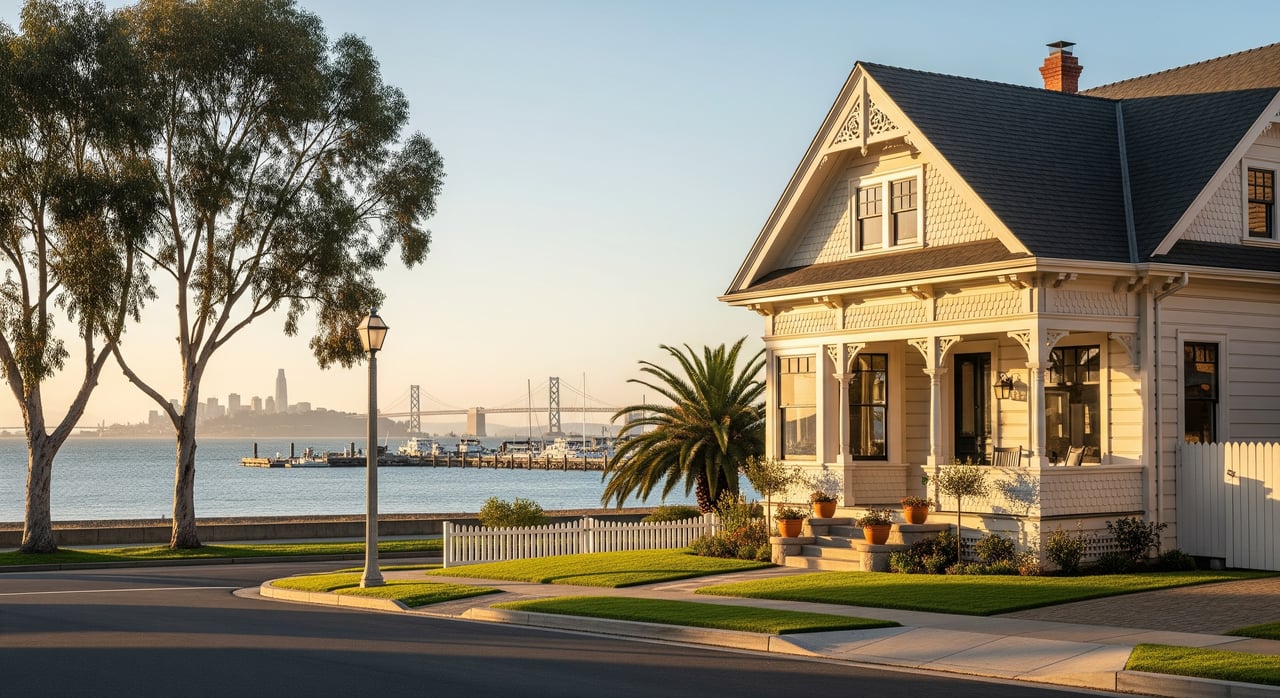
Compared with many SF neighborhoods, Alameda offers a larger share of detached single-family homes. You will see historic Victorians and early 20th-century bungalows, especially in the West End and Gold Coast. Midcentury and newer homes show up more in South Shore and planned communities on Bay Farm Island and Harbor Bay Isle. You will also find lagoon and waterfront properties in several areas.
Historic districts and upkeep
Historic districts give Alameda its charm with restored Victorians and Craftsman homes. Older homes can need seismic retrofits, drainage or foundation work, and periodic system updates. If you want to renovate or change a facade, historic rules and city review may shape your timeline and design, so plan early.
Waterfront and lagoon living
Waterfront and lagoon areas, including South Shore, West End, Harbor Bay Isle, Bay Farm Island, and parts of Alameda Point, offer a different lifestyle. Expect salt air and wind exposure, which can mean more exterior maintenance. Construction types vary, from raised foundations to slab on grade, so inspection scopes and ongoing care can differ by property.
Neighborhood snapshots
- West End and Gold Coast: Historic Victorians, tree-lined streets, and proximity to Park Street. A fit if you want period architecture and character.
- Fernside and Park Street: Craftsman homes and bungalows with walkable access to shops and restaurants.
- South Shore and South Shore Center: Midcentury and newer homes, condos and apartments, a shopping center, and shoreline parks.
- Bay Farm Island: Planned neighborhoods with newer condos and single-family homes, plus a golf course and easy access to bridges and the airport area.
- Harbor Bay Isle: A marina-oriented community with townhomes and single-family homes, typically with stronger HOA structures and shared amenities.
- Alameda Point and Seaplane Lagoon: A former naval base area with ongoing redevelopment and new infill homes. Access to the Seaplane Lagoon ferry terminal makes it attractive for commuters.
Use this snapshot as a short list starter, then weigh commute, housing era, and flood exposure for each area you like.
Commute options
Ferry to San Francisco
Many Alameda commuters choose the San Francisco Bay Ferry from Main Street or Seaplane Lagoon. Ferries offer a comfortable, car-free ride with a predictable routine. Schedules and capacity can change, so build a backup plan for time-sensitive days.
Bus and BART
AC Transit connects Alameda to Oakland BART stations, including Fruitvale and downtown Oakland stops. Since Alameda has no BART station on the island, you will typically bus or drive to BART, then head into the city. If you already use transit in SF, this combo tends to feel familiar after a short adjustment.
Driving realities
Driving routes run through Oakland via the tubes and then across the Bay Bridge. Peak-hour congestion and bridge tolls affect both time and budget. Many residents choose transit or ferry to avoid downtown SF parking and traffic.
Parking and last mile
Ferry terminal parking is limited, and rules vary by location. Some residents bike or take a shuttle to the terminal. In downtown San Francisco, most commuters rely on transit or walk from the terminal to the office.
Ownership costs to plan for
Price positioning
Relative to central SF, Alameda often gives you more interior space and yard for a similar or sometimes lower purchase price. Market dynamics vary by neighborhood and home type, so compare properties side by side and include monthly and long-term costs in your analysis.
Taxes and transfer costs
California property taxes start from a base tied to the purchase price with added local assessments. Transfer taxes and fees differ between cities and counties. Your title and escrow team can map out the exact numbers for your purchase.
HOA vs single-family tradeoffs
HOA properties, such as condos, townhomes, and many Harbor Bay communities, include dues that cover shared maintenance, landscaping, some insurance components, and amenities. Dues and rules vary by association and can affect pets, rentals, and exterior changes. Single-family homes skip HOA dues but put full responsibility for roof, foundation, landscaping, and repairs on you. If you are moving from a SF condo, compare monthly HOA costs with realistic maintenance projections for an older single-family home.
Insurance and risk
- Flood risk: Some Alameda areas fall within FEMA flood zones and are part of sea-level-rise planning. Properties in mapped zones may need flood insurance. Even outside mapped zones, consider elevation and long-term risk.
- Earthquake risk: As in the Bay Area generally, standard homeowners policies do not cover earthquakes. Review the home’s foundation and retrofit status and consider earthquake insurance.
- Waterfront maintenance: Salt air and wind can increase wear on exterior materials and systems for waterfront and lagoon homes.
Utilities and local rules
Plan to transfer electricity with Alameda Municipal Power and set up water, sewer, garbage, recycling, and telecom accounts. Some communities carry special assessments or Mello-Roos. Alameda regulates short-term rentals, and historic districts can affect renovation scope and timing. Confirm the rules that apply to your property.
Shortlist your neighborhoods
Use this simple, practical process to narrow your search:
- Pick your commute method and your time cap for a one-way trip.
- Choose a home type and era: historic SFR vs newer townhome or condo within an HOA.
- Map school boundaries and programs that match your needs.
- Check elevation and flood zones and flag properties for insurance review.
- For HOA communities, review budgets, reserve studies, meeting minutes, and rules early.
- Talk with a local lender about property-specific insurance and mortgage details.
- If an older home is on your list, plan for inspection depth and possible historic-district permitting.
Transition checklist
Set yourself up for a smooth move with these steps:
- Line up movers who know Alameda’s narrower streets and any truck permits you might need.
- If moving into a condo, reserve elevator times and loading zones in advance.
- Start utility and internet transfers 2 to 3 weeks before your move date.
- Order a general home inspection and add-on inspections for foundation, roof, sewer lateral, and termite or pest. For older homes, consider structural and drainage reviews.
- Gather insurance quotes for homeowners, earthquake, and flood if needed, and factor them into your monthly budget.
- Begin AUSD enrollment or private school applications on the school’s timeline.
- If you plan to renovate, confirm if the home falls within a historic district and contact the city early on to clarify design review steps.
- Build your local team: title and escrow, a local inspector and contractor, and a real estate agent with Alameda expertise.
Work with a local team
Moving from San Francisco to Alameda is a meaningful quality-of-life shift. The right guide helps you balance commute, home style, risk, and budget with confidence. If you want a clear, step-by-step plan, local neighborhood insight, and responsive buyer representation, connect with the Chris Clark Team. We will help you shortlist the right areas, pressure-test total costs, and move forward with clarity.
FAQs
Will I save money moving from SF to Alameda?
- Often you get more square footage and yard space for a similar or slightly lower price, but total costs like taxes, insurance, maintenance, and HOA dues should be part of the comparison.
Is commuting from Alameda to San Francisco realistic?
- Yes, many residents use the ferry or bus plus BART, while others drive through Oakland and across the Bay Bridge, and most choose transit to avoid downtown parking.
Are Alameda homes at notable flood risk?
- Some areas sit in FEMA flood zones and are part of sea-level-rise planning, so check maps and elevation and budget for flood insurance or mitigation where needed.
Should I choose a condo with an HOA or a single-family home?
- Condos offer lower daily maintenance but include dues and rules, while single-family homes give more autonomy and outdoor space with higher responsibility for upkeep.
How do I evaluate a historic home’s condition?
- Order a thorough inspection set that includes structure, foundation, roof, sewer, and pest, get estimates for seismic retrofits, and confirm any historic-district limits on exterior changes.